
Digital learning, well-being and data protection

Purposeful screen use and the protection of student data

Parents, school councils, trustees and ministries rightly ask how much time students spend on digital devices and how their personal information is handled. This page sets out Knowledgehook's approach to both questions and the evidence on which it rests.

Screen use and learning Data protection
Figure 1. Allocation of student time across one Short Learning Cycle DAY 4 OF 5
MON Screen Students complete a short check on one expectation 12 min
TUE Teacher Teacher reviews misconceptions and plans the lesson Teacher
WED Paper Targeted small-group teaching with manipulatives 40 min
THU Paper Printable practice on the same expectation 25 min
FRI Screen Short follow-up check confirms progress 8 min
12 minStudent time on screen
65 minMathematics with paper, manipulatives and the teacher
Note: Illustrative week.
KEY MESSAGES
1. Use is brief and directed by the teacher.Students use a device when the teacher initiates a check, then return to paper-based work and discussion.
2. Student data is not sold or used for advertising.Knowledgehook does not sell personal information and displays no advertising.
3. Data collection is limited to what instruction requires.First name, last initial, class and responses to mathematics questions.
4. Practice is consistent with provincial policy.Designed with reference to PPM 128 and the regulations under the Enhancing Digital Security and Trust Act, 2024.
SCREEN USE AND LEARNING

The purpose of screen use matters more than its duration

Results from PISA 2022 show that moderate use of digital devices for learning at school is associated with higher mathematics performance, while distraction by digital devices is associated with lower performance. Knowledgehook is designed to support the former and to avoid the latter.

Figure 2. Mathematics performance and use of digital devices at school, PISA 2022SCORE-POINT DIFFERENCE, AFTER ACCOUNTING FOR SOCIO-ECONOMIC PROFILE
Up to one hour a day using devices for learning at school, compared with none
+14 points
Distracted by other students using devices in at least some mathematics lessons, compared with never
−15 points
Note: Associations, not causal estimates. Students who used devices for learning for five to seven hours a day scored lower than those who used them for three to five hours. Source: OECD (2023), PISA 2022 Results (Volume II), Chapter 5.
"It is the overuse and/or misuse of digital devices that is negatively associated with performance."
OECD, PISA 2022 Results, Volume II

Access to devices alone has limited effects; structured mathematics practice with feedback shows the strongest evidence

Experimental studies distinguish between the provision of devices, which shows mixed results, and computer-assisted learning in mathematics, where the evidence is most consistent. A randomized trial of brief online mathematics work with feedback to teachers, the model closest to a Short Learning Cycle, found a positive effect on Grade 7 achievement.

Figure 3. Effects of technology use on mathematics achievement, by type of use
Distribution of laptops without integration into pedagogy (Peru)No improvement
UNESCO GEM Report, 2023
Educational technology in mathematics, all programs+0.15 SD
Cheung & Slavin, 2013 (74 studies)
Supplemental computer-assisted instruction in mathematics+0.18 SD
Cheung & Slavin, 2013
Online mathematics work with feedback to teachers, randomized trial+0.18 SD
Roschelle et al., 2016 (2,850 Grade 7 students)
BOX 1. IN PRACTICE

Most of the cycle takes place away from the screen

The device is used to identify gaps in understanding. Addressing them takes place at the desk, through printable intervention resources, manipulatives and small-group instruction led by the teacher.
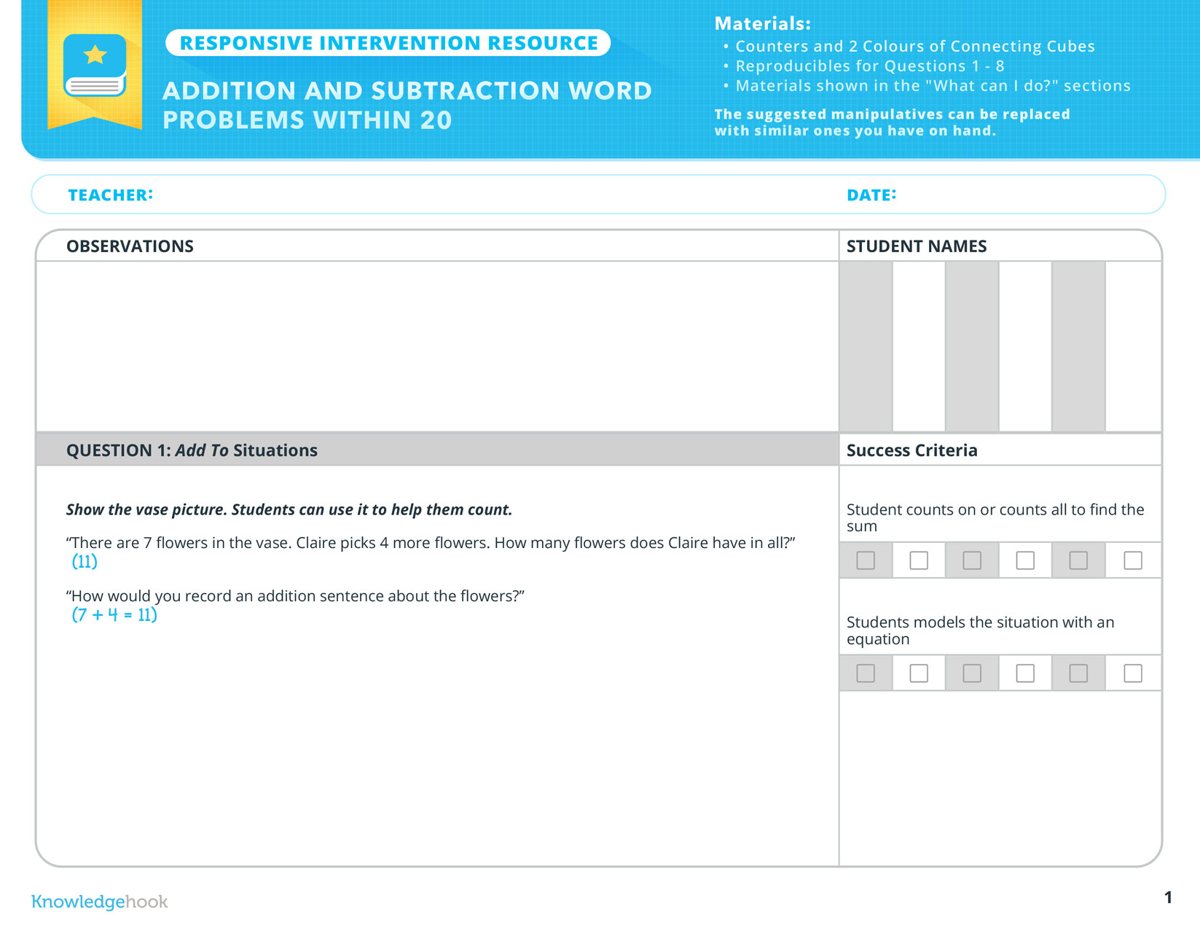
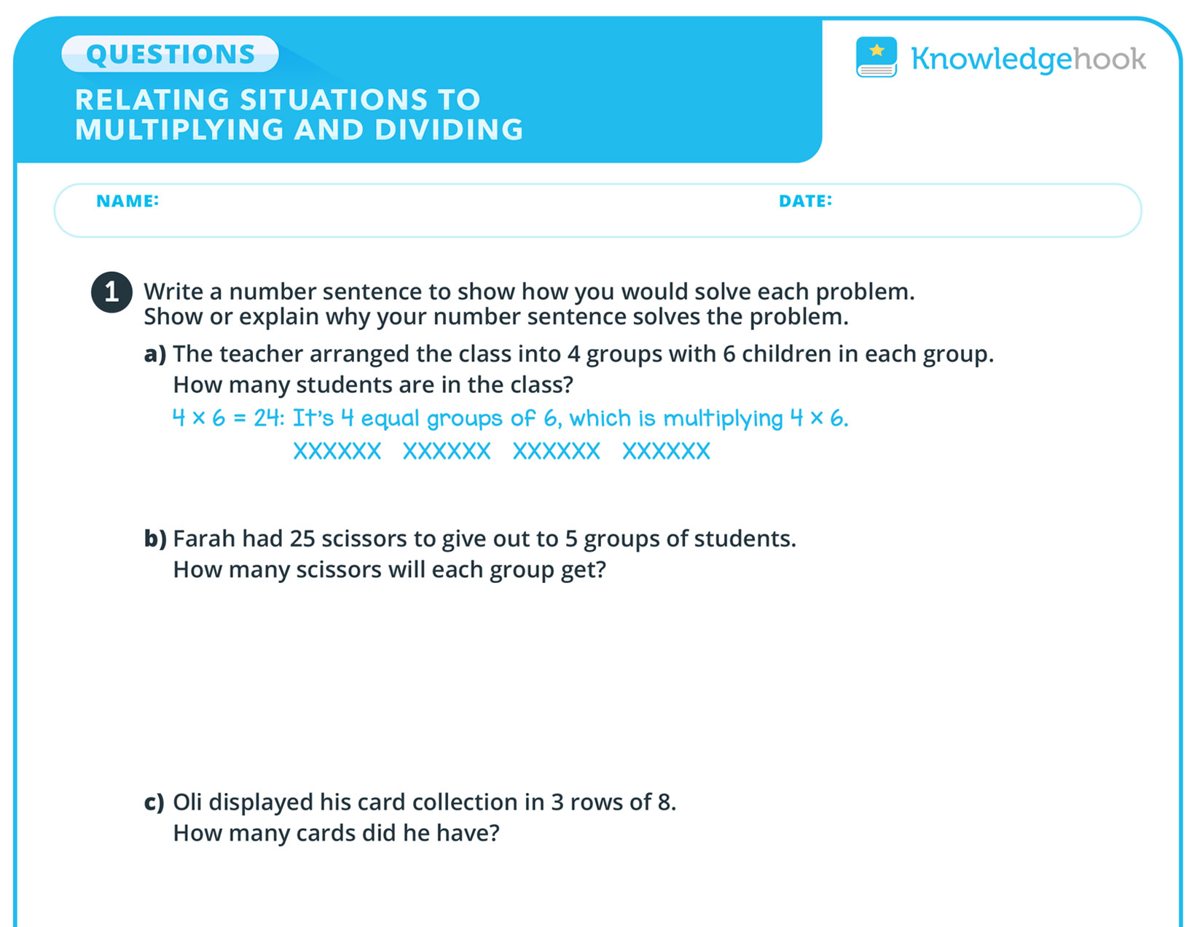
Printable Knowledgehook intervention resource with observation records and success criteria Printable Knowledgehook question sheet for multiplying and dividing
PERSONAL PHONES Stored out of view during instructional time
TEACHER-DIRECTED LEARNING Permitted for educational purposes, as directed by an educator

Consistency with Ontario's policy on personal mobile devices

Policy/Program Memorandum 128 requires personal mobile devices to be stored out of view during instructional time and restricts access to social media, while permitting use "for educational purposes, as directed by an educator". A Short Learning Cycle is initiated by the teacher, contains no social features and does not allow communication between students.

Read PPM 128 →
"Dynamic software and quality apps and games can increase proficiency and reduce learning gaps in mathematics."
Canadian Paediatric Society, Digital media position statement, 2019, reaffirmed 2025
"Prioritize screen activities that are educational, active, or social over those that are passive or unsocial."
Canadian Paediatric Society, Digital media position statement, 2019, reaffirmed 2025
ASSESSING EDUCATION TECHNOLOGY

Knowledgehook assessed against the four criteria proposed by UNESCO

The 2023 Global Education Monitoring Report recommends that digital technology "complement face-to-face interaction with teachers" and proposes that governments assess education technology against four criteria. Knowledgehook's response to each is set out below.

Each check is short, aligned to the Ontario expectation being taught, and started by the teacher during mathematics class. Closing the gap happens with paper, manipulatives and the teacher.

LIMITATIONS AND RISKS

Where the evidence identifies risks, the design responds to them

Excessive usePISA 2022 associates five or more hours a day of device use with lower performance. A Short Learning Cycle requires minutes rather than hours.
DistractionStudents distracted by other students' devices scored 15 points lower. Knowledgehook contains no chat, feed or messaging.
The role of printSweden increased funding for printed textbooks in 2023. Knowledgehook's intervention resources are designed to be printed and used at the desk.
References: screen use and learning (9)
OECD (2023). PISA 2022 Results (Volume II): Learning During and From Disruption. OECD Publishing. doi.org/10.1787/a97db61c-en
OECD (2024). Students, digital devices and success. OECD Education Policy Perspectives. doi.org/10.1787/9e4c0624-en
OECD (2024). Managing screen time: How to protect and equip students against distraction. PISA in Focus, No. 124. doi.org/10.1787/7c225af4-en
UNESCO (2023). Global Education Monitoring Report 2023: Technology in education, a tool on whose terms? gem-report-2023.unesco.org/
Escueta, M., Nickow, A. J., Oreopoulos, P., & Quan, V. (2020). Upgrading education with technology: Insights from experimental research. Journal of Economic Literature, 58(4), 897–996. doi.org/10.1257/jel.20191507
Cheung, A. C. K., & Slavin, R. E. (2013). The effectiveness of educational technology applications for enhancing mathematics achievement in K-12 classrooms: A meta-analysis. Educational Research Review, 9, 88–113. doi.org/10.1016/j.edurev.2013.01.001
Roschelle, J., Feng, M., Murphy, R. F., & Mason, C. A. (2016). Online mathematics homework increases student achievement. AERA Open, 2(4). doi.org/10.1177/2332858416673968
Canadian Paediatric Society, Digital Health Task Force (2019, reaffirmed 2025). Digital media: Promoting healthy screen use in school-aged children and adolescents. www.cps.ca/en/documents/position/digital-media
Ontario Ministry of Education (2024). Policy/Program Memorandum 128. www.ontario.ca/document/education-ontario-policy-and-program-direction/policyprogram-memorandum-128
DATA PROTECTION

Student data is held on behalf of students, families and school boards

Knowledgehook collects only the information required to support instruction, uses it solely for educational purposes and extends to all students the protections that apply to children under 13.

Figure 4. Personal information held for each student
First nameCollected
Last initialCollected
Answers to mathematics questionsCollected
Class, school and boardCollected
Email addressNever collected
Home addressNever collected
GenderNever collected
Student ID numberNever collected

Commitments on the use of student data

KNOWLEDGEHOOK DOES NOTSell personal information
KNOWLEDGEHOOK DOES NOTDisplay advertising
KNOWLEDGEHOOK DOES NOTUse cookies to collect personal information for behavioural advertising
KNOWLEDGEHOOK DOES NOTPermit communication between students
KNOWLEDGEHOOK DOES NOTRequest email addresses, home addresses or student ID numbers
KNOWLEDGEHOOK DOES NOTRetain personal data more than 30 days after an account is deleted
DATA LIFECYCLE

Figure 5. The lifecycle of a student record

1
CollectionFirst name, last initial, class and responses, entered by the teacher or through board sign-in.
2
UseSolely to show teachers and school leaders where students need support.
3
ProtectionEncrypted in transit, multi-factor sign-in, access-controlled data centres.
4
DeletionWhen an account is deleted, personal data is permanently removed within 30 days.
PROVINCIAL REQUIREMENTS

Supporting school boards' notice obligations

Regulations under the Enhancing Digital Security and Trust Act, 2024, in force since 1 July 2026, require school boards to provide plain-language notice when they share a student's information with a software application. Knowledgehook provides the information each notice requires.

Note: Template for illustration.
NOTICE OF INFORMATION SHARED WITH A SOFTWARE APPLICATION Dear parent or guardian,
Information sharedYour school board shares your child’s first name, last initial, class and school with Knowledgehook. Knowledgehook records answers to mathematics questions.
PurposeTo help your child’s teacher see which math ideas are understood and which need more teaching.
Application and operatorKnowledgehook, operated by Knowledgehook Inc., Toronto, Ontario.
Legal authority[Board to complete]
Board contact[Name and contact of the board’s privacy lead]
Your rightsYou may ask to see, correct or delete your child’s information. Knowledgehook never sells it or uses it for advertising.
LEGAL AND POLICY FRAMEWORK

Developments in student privacy relevant to Canadian school systems

PROVISIONRegulations under the Enhancing Digital Security and Trust Act now govern how school boards handle digital information about students under 18, including notice to families when information is shared with software.
KNOWLEDGEHOOK'S APPROACHKnowledgehook provides each board with the information its notice requires and treats its handling of student data as part of the board’s obligations.

Safeguards for students

No student-to-student communicationStudents cannot message or contact one another.
Screening of student entriesAnything a student types is checked against a list of banned words.
Parental consentTeachers obtain parental consent through a consent form at registration.
Security measuresSSL encryption, multi-factor authentication and access-controlled data centres.

Documentation for school boards

Documentation to support privacy impact assessments and approval by school boards.

Privacy policy→ Privacy policy audit checklist (COPPA, FERPA, PIPEDA, GDPR)PDF Privacy FAQ for school boards PDF Privacy FAQ for parents PDF
Accountable for privacy at Knowledgehook[email protected]

Briefings for privacy officers and trustees

Knowledgehook's team can brief school boards on data practices, the design of screen use and the documentation required for approval.

Request a briefing